
A detailed guide to hybrid embedded architecture for product and engineering leaders
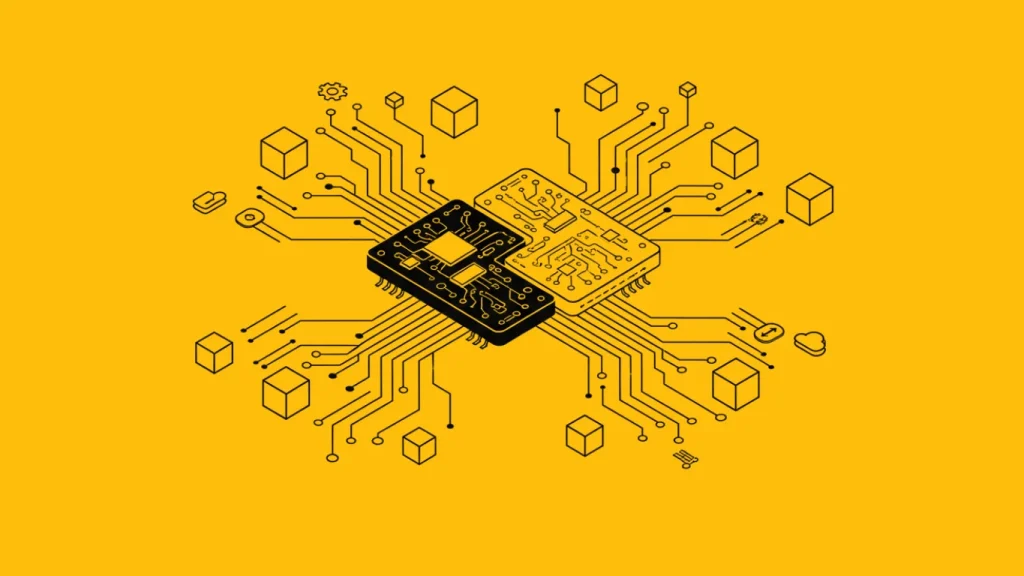
Connected products are moving beyond stand-alone firmware. The winning pattern is a hybrid embedded architecture: do time-critical work on the device, and push heavy compute, storage, analytics, and fleet ops to the cloud. This model pairs real-time responsiveness with elastic scale and simpler operations. Below is a concise playbook on why it matters, what to build, and how to roll it out with security and maintenance in mind.
What is a hybrid embedded architecture?
A product pattern where:
- Edge (device): Handles sensing, actuation, safety paths, and latency-sensitive UI even when offline.
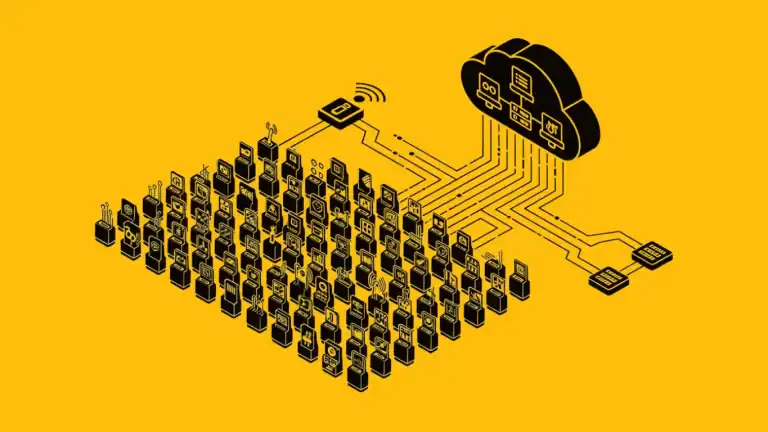
- Cloud: Handles orchestration, long-term data, analytics, ML training/serving, device twins, and fleet ops.
- App/Portal: Presents state, insights, and controls to users and operators.
One sentence definition: Keep real-time decisions at the edge; centralize everything else for scale and learning.
Why Use embedded architecture?
The old “device-only” approach struggles in a world of constant connectivity and updates. Cloud-only isn’t right either—latency, outages, and single points of failure. Hybrid combines the strengths of both:
- Real-time where it counts: Keep control loops, sensing, and safety paths local so they work even when the internet doesn’t.
- Scale without overbuilding hardware: Use modest on-device resources and burst to cloud compute and storage when needed.
- Richer features over time: OTA firmware, remote diagnostics, analytics for predictive maintenance, and ML model iteration.
- Centralized fleet ops: Monitor, configure, and patch thousands of devices from one place.
Make the split early: device vs cloud
| Capability | Edge (device) | Cloud |
| Safety paths and control loops | ✅ | ❌ |
| First-run setup and local UI | ✅ | Assist |
| Schedules/policies | Cache & enforce | Source of truth |
| Credentials & keys | Secure element/TPM | Rotate, attest |
| Data storage | Short ring buffer | Long-term lake/warehouse |
| Analytics/ML | Light inference | Heavy training/serving |
| OTA execution | Receive/rollback | Stage/approve/track |
| Fleet ops | Execute commands | Orchestrate & audit |
Rule of thumb: If it breaks user safety or core function when the network drops, keep it on the device.
The CORE building blocks
Edge (on-device) intelligence, in motion:
- Offline behavior: Define what must keep working without a network (e.g., a lock still opens with valid credentials).
- Lean, resilient comms: Prefer MQTT/CoAP; queue and retry cleanly; watch timeouts and backoff.
- Strong device security: TLS for transport, authenticated endpoints, and hardware-backed key storage (TPM/secure element).
Cloud back end - Elastic services: Serverless, containers/Kubernetes, and managed databases to scale with load.
- Device state in the cloud: Use a device shadow/digital twin so apps can read or set state even when the device is offline.
- Data pipeline & analytics: Ingest telemetry reliably, then run real-time dashboards and big-data jobs for insights and model training.
Development process: from idea to scale
A. Design the split up front
Decide what lives on the device vs. the cloud using first principles. Example: a thermostat keeps control loops and local UI on the device; scheduling, weather-aware optimization, and remote access run in the cloud. Making this call early prevents expensive rework.
B. Develop in parallel with a shared contract
Run hardware, firmware, and cloud teams side by side against an executable spec and stable APIs. Use a HAL so core logic runs in simulation before hardware lands.
C. Integrate as confirmation—not discovery
With clear boundaries and CI/CD, integration should validate assumptions, not uncover them. Use automated test rigs to exercise the full path—sensor → device → cloud → device.
Security and upkeep over the product’s life
Security is ongoing: Regular audits, automated scans on firmware and cloud code, signed OTA updates, and an incident plan.
Operate the fleet: Cloud device management for health, metrics, remote fixes, and progressive rollouts. Feed crash/perf data back into the roadmap.
Outro: The integrated path forward
Hybrid architectures, align engineering with the business: faster features, safer operations, and a platform you can evolve. It’s a shift from shipping static devices to running a living product.
Ready to plan your next connected product? Get in touch with Better Devices. We’ll help you map the split, design the protocol, and stand up a secure, scalable system end to end.
FAQs
What’s the best protocol for fleets?
MQTT for pub/sub fleets; CoAP for constrained REST. Use both if the product spans patterns.
What belongs in a device twin?
Desired state, reported state, timestamps, and pending ops with reasons. Keep payloads small and versioned.
How do I handle clocks?
Use monotonic timers for safety paths. Sync wall time via NTP or GPS. Guard for skew and leap seconds.
Do I need a screen?
Often no. Use LED/tone/haptic patterns and surface detail in the app.
How do I prevent bricking during OTA?
A/B slots, signed images, health checks, and automatic rollback. Stage updates in waves.
Join other engineering leaders receiving our monthly insights, or reach out to discuss how Better Devices can help your team ship faster.